Self-awareness
Students explore emotions, preferences, strengths, support needs, identity, and self-advocacy.
Relationships, regulation & leisure
Connection and regulation make learning possible. Friendship, self-advocacy, leisure, recreation, and contribution make life meaningful.
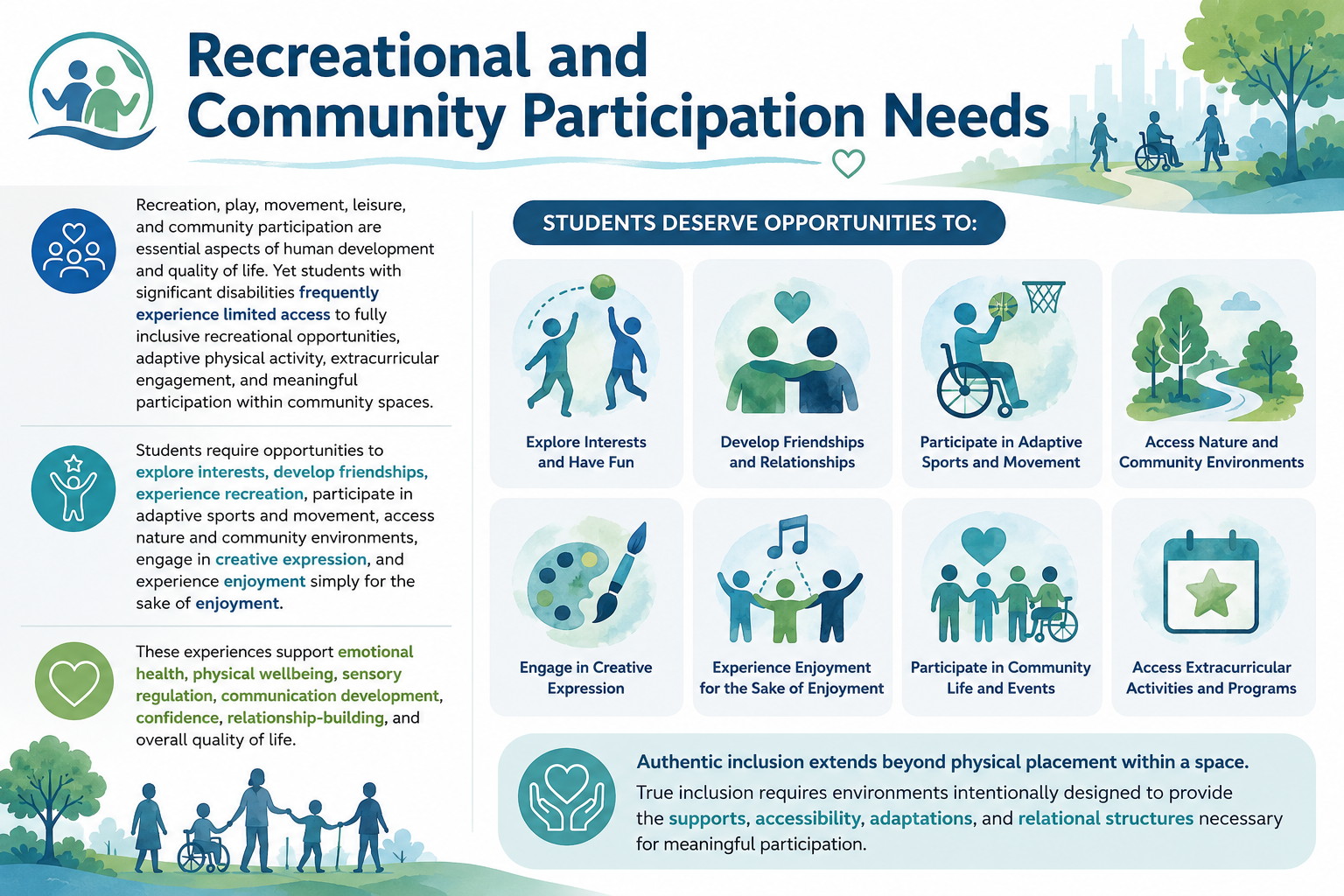
Students explore emotions, preferences, strengths, support needs, identity, and self-advocacy.
Students practice noticing and responding, joining activities, waiting, taking turns, cooperating, setting boundaries, and building friendships.
MindUP supports mindfulness, brain awareness, emotional vocabulary, attention, empathy, and individualized strategies.
MindUP ↗Behavior is understood as communication. Staff notice, check contributing factors, regulate, relate, teach, repair, and review.
Brooks Response Sequence →Students explore sports, dance, gaming, art, music, nature, hobbies, relaxation, and lifelong interests.
Clubs, leadership, service, family events, and Friday activities create authentic places to participate and belong.
Explore Unified Community →Regulate. Relate. Reason.
Adults begin by helping students feel safe and regulated, then build connection, and only then ask for complex thinking or new learning. Regulation supports relationships; relationships support learning; and successful learning builds confidence and regulation.
Explore Regulation Supports Learning