
Notice
Recognize a change from the student’s individual baseline or an emerging pattern.
Calm people. Clear supports. Brighter futures.
Behavior is understood before it is managed. Adults respond through safety, regulation, communication, relationship, teaching, repair, and reflection.
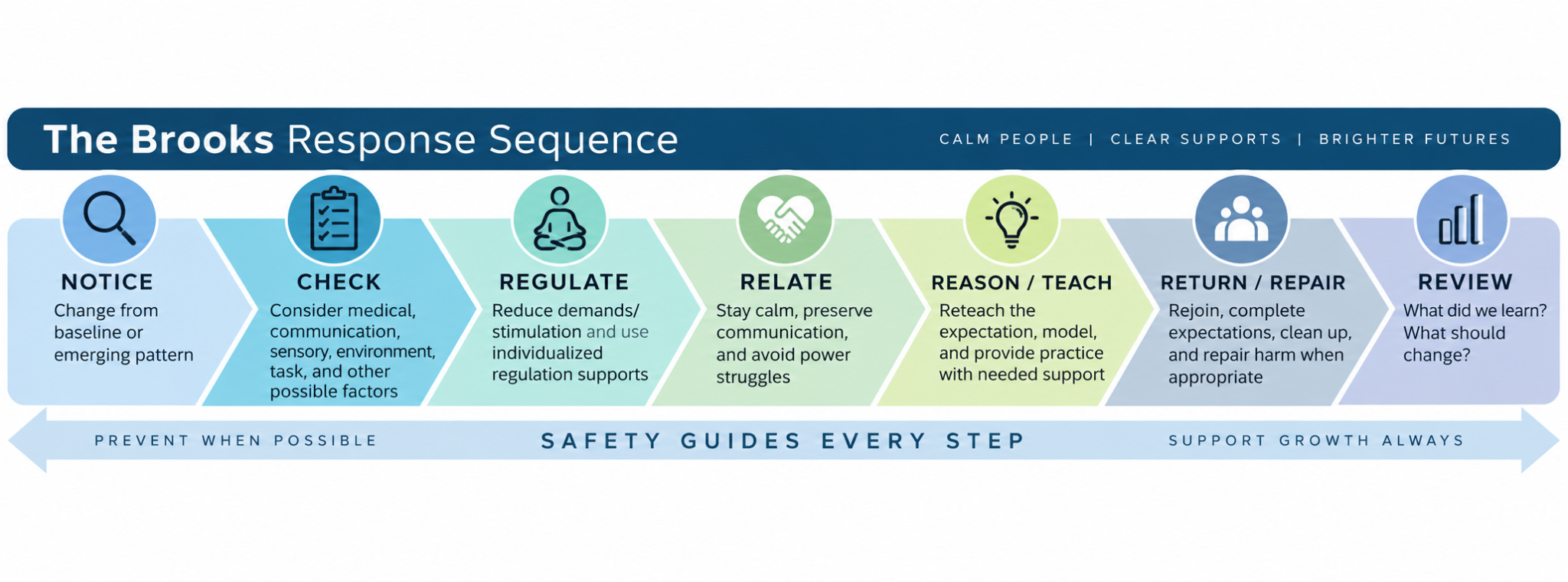
Recognize a change from the student’s individual baseline or an emerging pattern.
Consider medical, communication, sensory, environmental, task, and relationship factors.
Reduce demands or stimulation and use individualized regulation supports.
Stay calm, preserve communication, and avoid power struggles.
Reteach expectations, model the safer response, and provide supported practice.
Rejoin, complete expectations when appropriate, clean up, and repair harm.
Ask what the team learned and what should change next time.
Communication access, health knowledge, predictable routines, and environmental support reduce preventable distress.
Adults remain calm, reduce escalation, preserve dignity, and use only the support needed for safety.
The sequence ends with learning, repair, and change—not shame.