MOVE International

MOVE identifies meaningful functional goals for sitting, standing, walking, and transitioning, then creates frequent practice opportunities throughout the student’s real day. Movement is connected to participation: reaching a friend, joining a lesson, moving through the school, playing, helping, and exploring.
Learn about MOVE International ↗
Movement & Learning
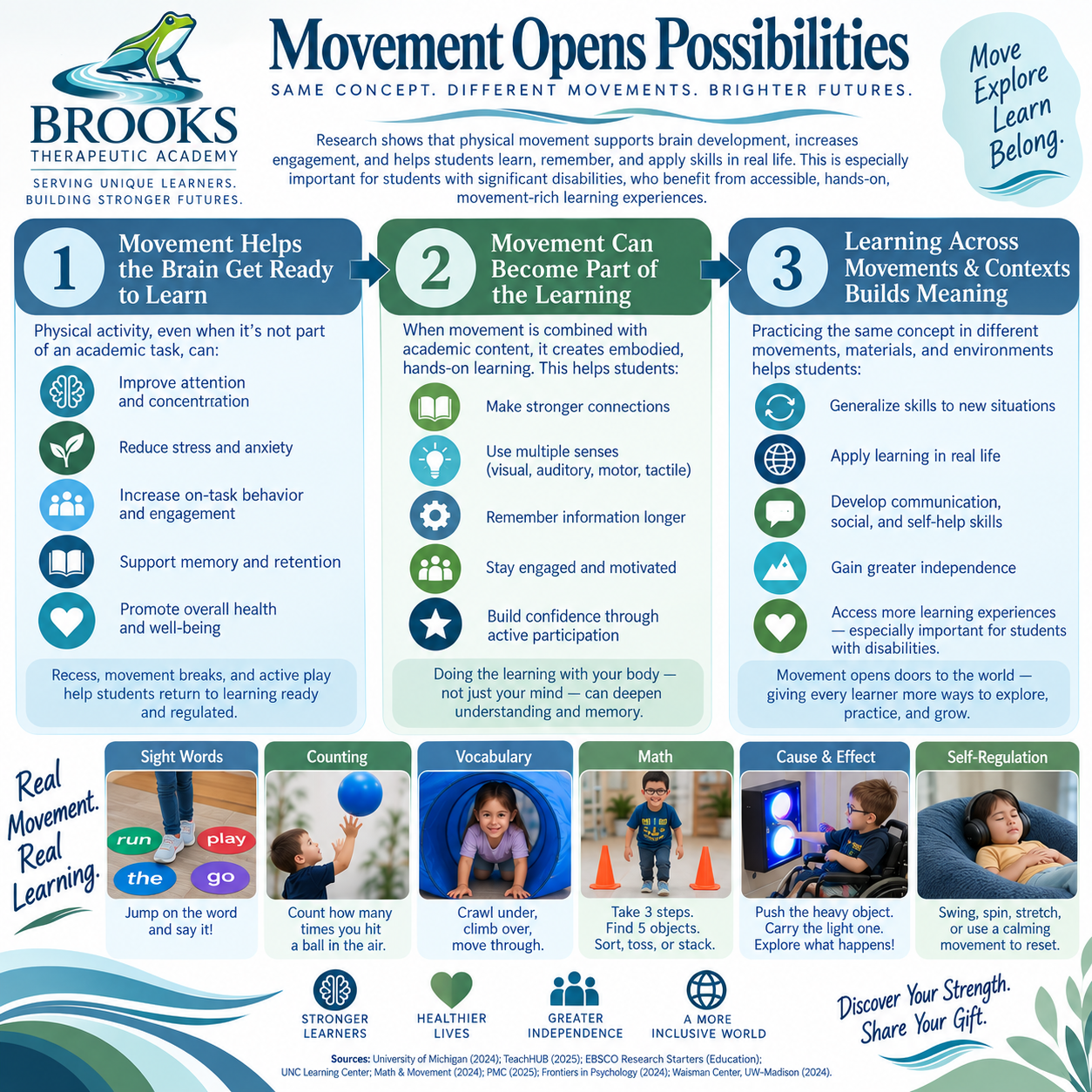
Movement is part of how students learn at Brooks. During movement activities, students build vocabulary and language while practicing concepts from mathematics and other academic areas. They may learn action words, body-part vocabulary, positional concepts, counting, patterns, sequencing, comparison, and problem-solving while their bodies are actively engaged.
Movement activates different parts of the brain and gives students more than one way to experience a concept. Connecting words and ideas to physical action can strengthen understanding, help learning stick, and make it easier for students to use their skills in new activities, environments, and real-life situations.
Educators and therapists intentionally connect movement with classroom themes, communication goals, functional academics, and daily routines so students can practice the same ideas across the school day.