Dress for Life
Choice, independence, dignity, and readiness.
Students learn dressing and grooming skills, explore adaptive and sensory-friendly clothing, develop personal style, and practice choosing clothing for school, recreation, community life, and future work.
Explore Dressing for Life →Cooking and eating
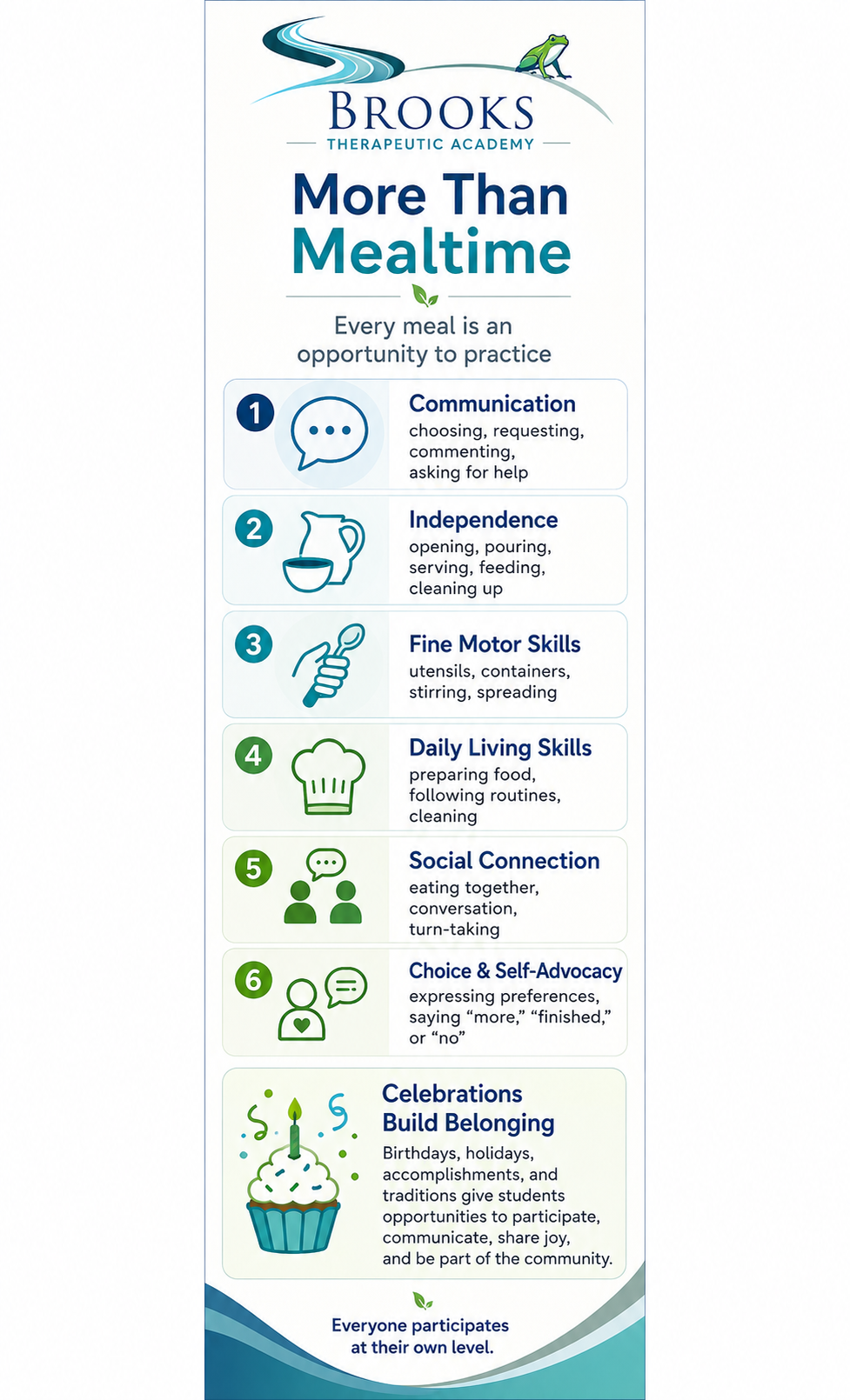
Meals connect communication, choice, recipes, measuring, safety, preparation, self-feeding, utensil use, manners, cleanup, and social participation. Students who do not eat orally still participate through preparation, sensory exploration, communication, and relationships.
Hygiene and personal care
Handwashing, tooth brushing, grooming, toileting, menstrual care, bathing, and other routines are taught with dignity and individualized support.
Household management
Students practice making beds, laundry, organizing belongings, cleaning, dishes, trash, schedules, and contributing to shared spaces.
Biking and Mobility
Everyone deserves the chance to ride.
Traditional and adaptive cycling connect movement, mobility, recreation, route planning, friendship, confidence, and lifelong participation.
Why Brooks chooses biking for everyone →