
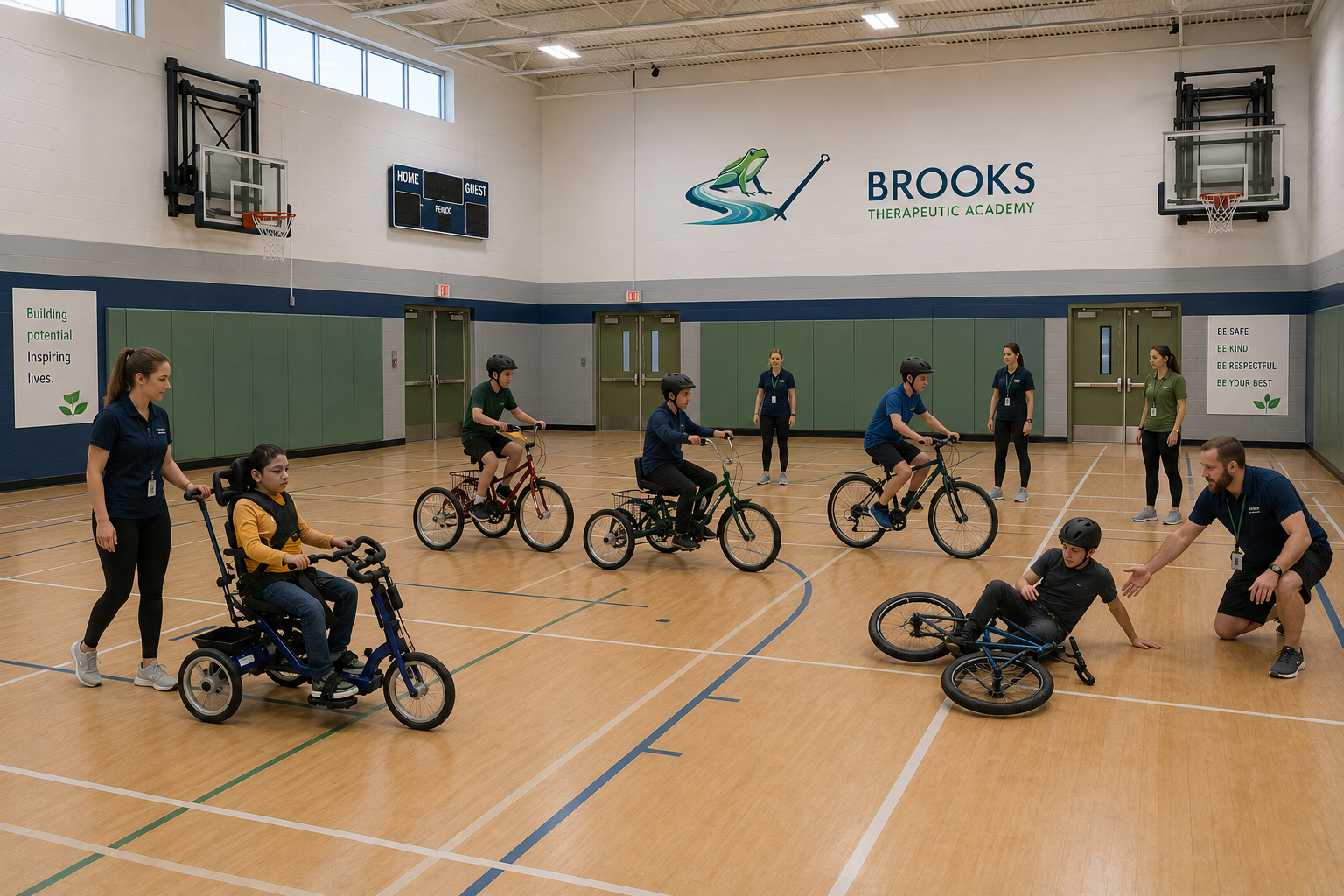
Motor skills grow through repetition. Brooks plans to make riding part of the school rhythm, with opportunities during movement instruction, adaptive physical education, transitions, outdoor learning, recreation, and community mobility.
A student might ride to the playground, practice navigating a route, build endurance on a stationary stand, join peers outdoors, or use a bike for a purposeful campus trip. The goal is not one identical riding program. The goal is meaningful access to riding.
Fit and safety matter
Adaptive equipment must be selected and adjusted for the individual rider. Therapists and trained staff will consider leg length, head and trunk control, reflexes, positioning, transfers, fatigue, steering, braking, and the supports needed for safe participation. Riding plans will be individualized rather than based on a diagnosis alone.