
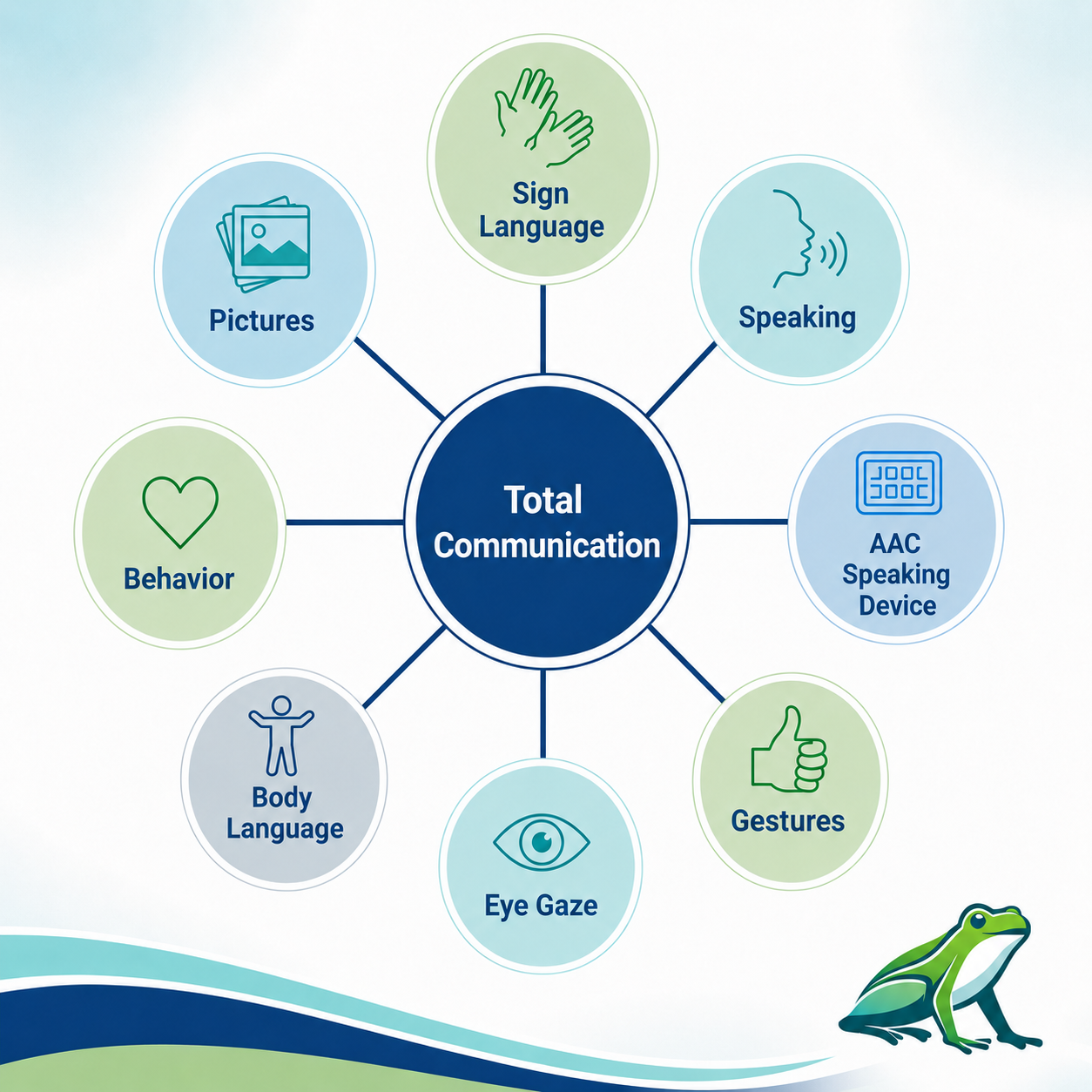
Communication is fundamental to education.
Brooks rejects the idea that communication is merely a related service. A student cannot fully access instruction without a reliable way to understand what is being taught—and cannot demonstrate what they know without a reliable means of expression. Communication is not an addition to learning. It is the foundation upon which learning is built.
Communication is the brook that runs through everything at Brooks.
Access belongs everywhere.
Every staff member is trained to support augmentative and alternative communication (AAC), and each student has access to a communication system tailored to their needs. Classrooms, hallways, playgrounds, common areas, and shared spaces include basic communication boards so access remains available even when a personal device is not.
Real communication happens in real life.
Specific communication skills may sometimes need direct instruction and repeated practice, but the most meaningful learning happens during authentic experiences. Mealtimes, play, academic lessons, community outings, vocational activities, and social interactions all create reasons to request, refuse, comment, ask questions, share feelings, make choices, joke, connect, and advocate.
Every form of communication is valued.
Speech, gestures, facial expressions, sign language, eye gaze, AAC, body movement, and behavior can all carry important messages. When behavior communicates discomfort, confusion, excitement, an unmet need, or a desire for connection, the team works to understand that message, honor the underlying need, and teach safer and more effective ways to express it.
Communication is not a separate part of the day. It is embedded within everything Brooks does because every moment is an opportunity to connect, understand, and be understood.